Yangon · Bangkok
+95 9 765 929 492
About Switzerland
Switzerland has been the global benchmark for hospitality education since the 19th century, when the Swiss pioneered modern hotel service and culinary excellence. Today, Swiss hotel schools consistently dominate global rankings — holding 9 of the top 10 positions in the QS World University Rankings by Subject for Hospitality & Leisure Management. Swiss hospitality programmes differ fundamentally from traditional universities: they combine academic study with mandatory paid international internships (typically CHF 2,100–2,400/month salary), meaning students earn while they learn. Most programmes are offered at private specialist institutions in picturesque locations — lakeside Montreux, Alpine Leysin, or Lucerne — and award dual degrees with accredited UK or US partner universities. Fees are higher than most study destinations (CHF 20,000–65,000/year all-inclusive for tuition, accommodation, and meals), but the career outcomes are exceptional: graduates routinely enter management roles at Four Seasons, Ritz-Carlton, Marriott, Hilton, and other luxury brands within months of graduating.
Institutions
20+
Tuition fees
CHF 20,000 – CHF 65,000/year
Student life
90%
International students
35,000+
Employability
92%
Work rights
The Switzerland advantage
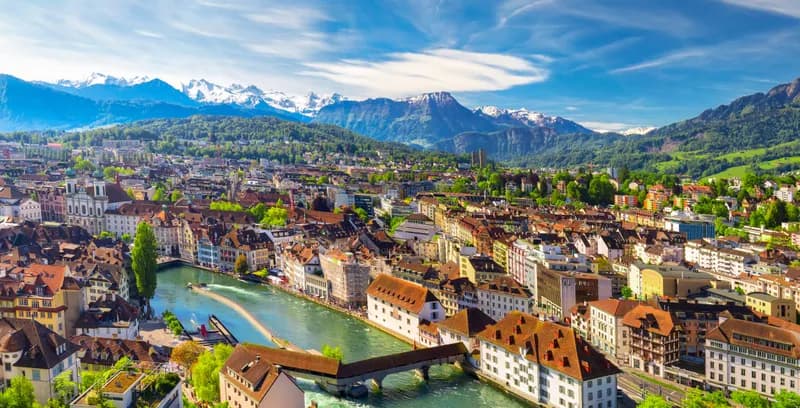
Swiss hotel schools hold 9 of the global top 10 spots in QS Subject Rankings for Hospitality. A Swiss hospitality degree is the most recognised credential in the global hotel industry — opening doors at every luxury brand worldwide.
Swiss programmes include mandatory paid internship semesters at partner hotels (Four Seasons, Ritz-Carlton, Kempinski). Interns earn CHF 2,100–2,400/month — substantially offsetting study costs while building a global professional network.
Most Swiss hospitality schools award degrees jointly with accredited UK (University of Derby, Ulster University, Edinburgh Napier) or US (Washington State University, Northwood University) partner universities — giving graduates two internationally recognised credentials.
Academic specialties
The journey ahead
Research the six leading Swiss hospitality schools, compare programmes (hospitality management, culinary arts, business), campus locations, and partner university degree awards to identify your best fit.
Submit your application with academic transcripts, English language proof, passport copy, and a personal statement. Most Swiss hospitality schools have rolling admissions with multiple annual intakes.
After accepting your offer and paying the confirmation deposit (typically CHF 2,000–3,000), apply for a Swiss National Visa (Category D) at your local Swiss embassy. Processing takes 4–8 weeks.
Arrive in Switzerland, check into on-campus accommodation, attend orientation, and register with local authorities within 14 days to obtain your residence permit (L or B permit). Your school will guide you through this process.
Common questions
Yes — Swiss hotel schools are the most respected hospitality credentials in the world. Swiss schools hold 9 of the QS top 10 global positions for Hospitality & Leisure Management. Graduates are actively recruited by Four Seasons, Ritz-Carlton, Marriott, Hyatt, and every major luxury hotel group from day one.
Fees range from CHF 20,000 to CHF 65,000 per year. Many programmes are all-inclusive (covering tuition, accommodation, and meals), which reduces the apparent living cost gap. Paid internship semesters (earning CHF 2,100–2,400/month) also offset overall programme costs.
Yes — all programmes at these schools are taught entirely in English. Requirements vary: IELTS 5.0–6.5 (or equivalent TOEFL/PTE) depending on the school and programme level. Some schools offer preparatory English programmes for students who need language support.
Non-EU students on a student visa may work up to 15 hours per week during studies. However, paid internship semesters are built into most Swiss hospitality programmes and are completed under the student visa — these offer CHF 2,100–2,400/month and count as part of the degree.
Most Swiss hospitality schools offer multiple intakes per year — typically in January, April, July, and October. Rolling admissions mean there's no single application deadline, but visa processing requires 8–12 weeks lead time.
Ready to study in Switzerland?
Book Free Consultation