Yangon · Bangkok
+95 9 765 929 492
About Germany
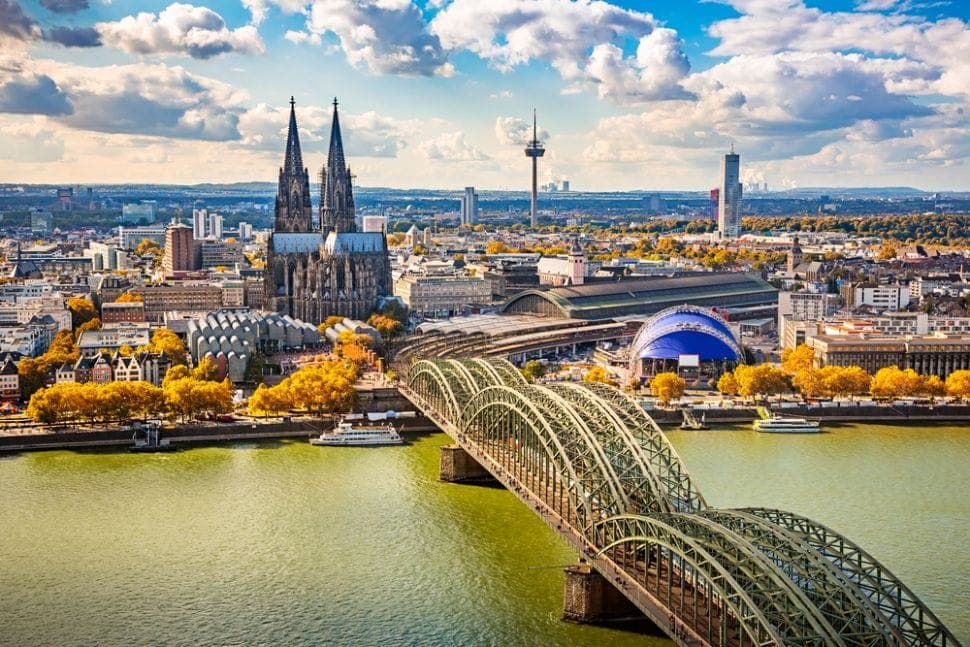
Germany is one of the world's top study destinations, home to over 400 higher education institutions and more than 400,000 international students. Renowned for engineering, technology, and business, Germany offers low-cost public universities (often semester fees only) and a growing number of English-taught programmes at private institutions — the route many of our Myanmar students take. With a strong economy, the 18-month Job Seeker Visa, and up to 140 full or 280 half work days per year during study, Germany provides strong value for internationally ambitious students.
Institutions
400+
Tuition fees
€0 – €20,000/year
Student life
82%
International students
400,000+
Employability
87%
Work rights
The Germany advantage
Public universities often charge no tuition beyond semester fees. Private universities in Germany are still typically cheaper than the UK or USA, with annual fees commonly between €5,000–€20,000 — and many English-taught programmes sit in that private segment.
Germany produces the engineers behind BMW, Bosch, Siemens, and SAP. A German engineering or tech degree is globally recognised and opens doors across Europe and beyond.
After graduation, the German Job Seeker Visa gives you 18 months to find employment. With one of Europe's strongest job markets, graduates from international students have a clear pathway to work and residency.
Academic specialties
The journey ahead
Identify whether you want a public or private university. Use DAAD (daad.de) to explore English-taught programs. Confirm language requirements — most private universities teach in English; most public universities teach in German.
Gather transcripts, English proficiency scores (IELTS/TOEFL), motivation letter, and CV. Apply directly to the university or through uni-assist.de (the central application portal used by most German universities for international applicants).
Once admitted, you'll receive an official admission letter. Open a German blocked account (Sperrkonto) showing €11,904/year (€992/month) — a mandatory requirement for the student visa to prove financial sufficiency.
Apply for a German National Visa (Type D) at the German embassy or consulate in your home country. Attend the appointment with your admission letter, blocked account proof, health insurance, and passport. Visa processing takes 4–8 weeks.
Common questions
Not necessarily. Many private universities in Germany, including IU International, GISMA, SRH Berlin, and others, offer fully English-taught programs at bachelor's and master's level. Public universities primarily teach in German, so a B2/C1 level is usually required for those programs.
A German blocked account (Sperrkonto) is a special bank account that holds your living expenses for one year (currently €11,904, or €992 per month). You can only withdraw a fixed monthly amount. The German embassy requires proof of this account before issuing a student visa — it guarantees you can support yourself financially without working.
International students can work 140 full days or 280 half days per year (or about 20 hours per week during lecture periods). Working more requires approval from the Federal Employment Agency and your local foreigners' authority.
Yes. Germany offers an 18-month Job Seeker Visa after graduation, allowing you to look for employment related to your degree. Once you find a job matching your qualifications, you can convert to a work permit and eventually apply for permanent residency.
DAAD (Deutscher Akademischer Austauschdienst / German Academic Exchange Service) is Germany's official organisation for international academic cooperation. Its website (daad.de) lists all accredited programs, scholarship opportunities for international students, and official country-specific admission requirements.
Ready to study in Germany?
Book Free Consultation